
Covering September 2025 · Published for the web in October 2026.
The booth is busy, people are participating and the team is collecting photos. Then the event ends. A few days later, someone asks what should happen to the contact list, which footage can be used and where interested visitors should go next.
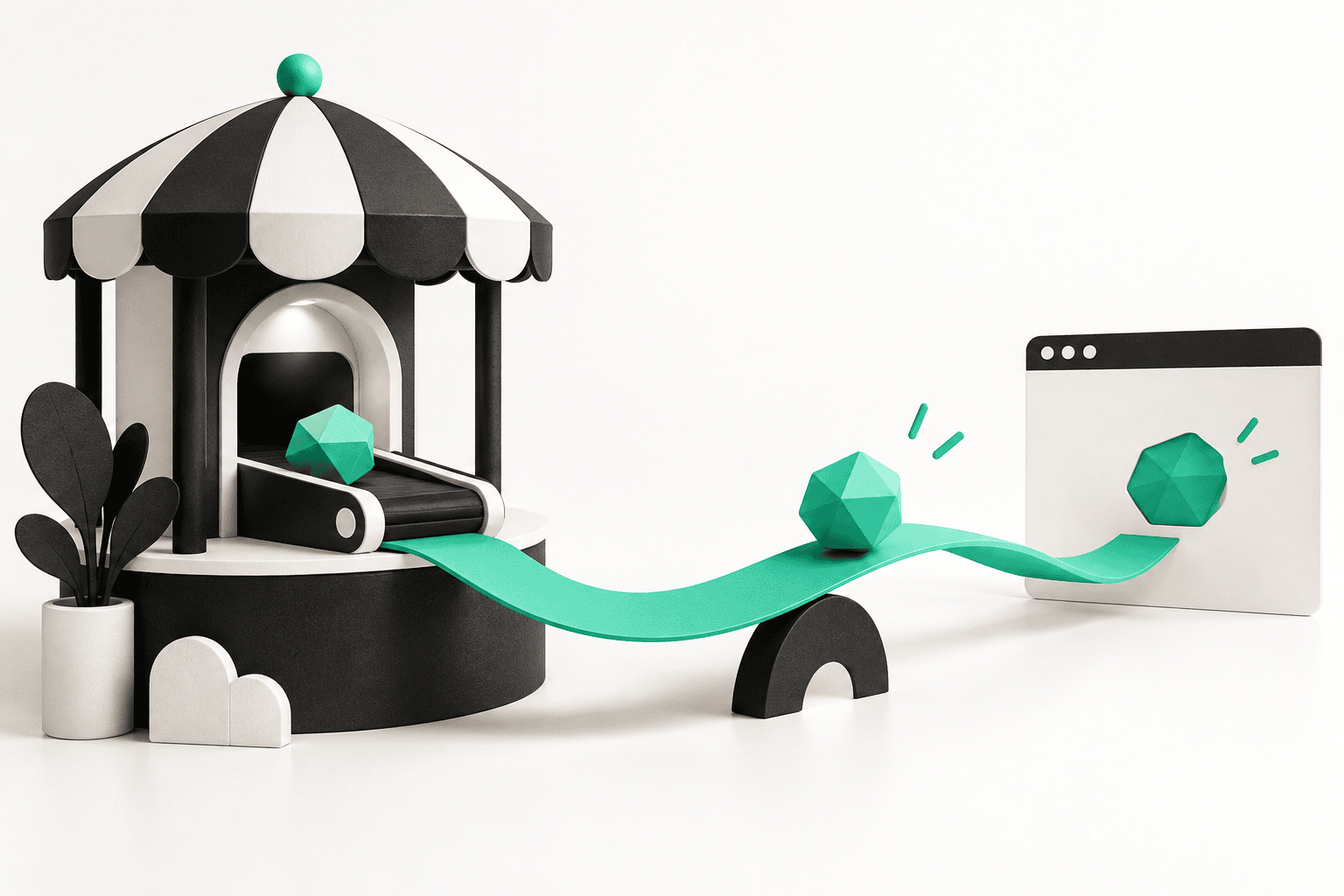
Those questions belong in the creative brief. Experiential marketing follow-up works best when it is part of the experience from the beginning, with a useful next step rather than a generic sales message attached afterward.
Adobe’s forecast for 2025 included immersive experiences that connected physical and digital worlds. For a September activation plan, the opportunity was to think beyond the installation itself: what could someone understand, keep or act on after participating? Adobe’s December 2024 forecast
Define what the visitor gets
Begin with the participant’s value, not the brand’s data request. Is the experience useful, entertaining, educational or expressive? What does someone leave with even if they never become a customer?
HalfGenius’s Canon portfolio describes an interface that let visitors create and print cheer signs at the Little League World Series. Its Verizon portfolio describes a custom interface for coloring stickers that were printed on-site. In both published examples, participation produced something tangible.
For a new activation, a useful take-away can extend the experience because it has a purpose beyond displaying a logo. Design its role in the visitor’s day before deciding where to place the brand.
For your activation, complete two sentences: “Visitors come because…” and “Visitors leave with…” If the second answer is only “our contact information,” the concept may need more work.
Offer a next step that fits the experience
Someone who enjoyed a quick activity may not be ready for a sales call. Give them an appropriate route forward: view their creation, download a relevant resource, explore a product demonstration or request a conversation.
Make the destination specific. A QR code that opens a general homepage asks the visitor to reconstruct the connection. A focused page can acknowledge the experience and explain the next action in plain language.
Keep the non-digital path in mind. Printed information, a clear URL or a staff explanation may help when a visitor cannot scan a code or the venue connection is unreliable.
Test the entire route in realistic conditions. A beautiful landing page is not useful if it takes too long to load where the experience takes place.
Separate participation from marketing permission
Be clear about what information is required to deliver the experience and what is optional for later communication. Do not quietly treat participation as agreement to unrelated marketing.
Explain what someone will receive, who will send it and how they can change their preference. Keep the collection proportionate to the purpose. If the activity only needs an email address to deliver a requested file, a long business-profile form may be unnecessary.
Work with the appropriate privacy and legal reviewers for the audience and location. This is especially important when children, sensitive information or recording permissions are involved. A creative brief should identify those questions early rather than leaving them to event staff.
Plan content capture with consent and purpose
Decide which moments are worth recording and what the resulting content will do. A short demonstration, a wide environmental shot and a participant reaction serve different purposes.
Arrange permissions and clear filming expectations. Give visitors a practical way to participate without appearing in promotional content where appropriate. Check backgrounds for private information and bystanders who have not agreed to be featured.
Prepare a shot list that supports useful outputs: a recap, a product explanation, an internal learning record or a future case study. Avoid collecting hours of footage with no plan for editing or distribution.
Keep a record connecting approved assets to their permitted uses. The person editing after the event should not have to guess.
Assign the follow-up before opening day
Name the person responsible for requested resources, qualified inquiries, general feedback and technical issues. Prepare the relevant messages and landing pages while the experience is being built.
Follow-up should reference what the visitor actually did or requested, without implying a closer relationship than exists. Send a promised resource promptly according to the agreed plan. Offer a conversation when it fits the person’s expressed interest.
Do not let every contact enter the same sequence by default. A participant asking for a download, a potential buyer requesting a demo and a partner offering collaboration need different responses.
Measure participation and progress separately
Count meaningful participation, successful completion and technical failures. Then examine later actions such as requested resources, relevant inquiries or booked conversations, using appropriately collected data.
Attendance is useful context, but it does not establish commercial impact by itself. Nor does a scan prove that someone read the destination. Define what each measure means and what you can reasonably conclude from it.
Close the event with a short review of what visitors understood, where the experience struggled and whether the promised follow-up worked.
HalfGenius’s Experiential Marketing services connect interface design, activation and strategy. Talk with Team Genius about an experience whose next step is as thoughtfully designed as its first impression.
YOUR NEXT BIG IDEA
Let’s make it happen.
Tell us what you’re working on. We’ll help you find the right next step.